The Next Evolution of 2D DIC: Introducing VIC-2D 8
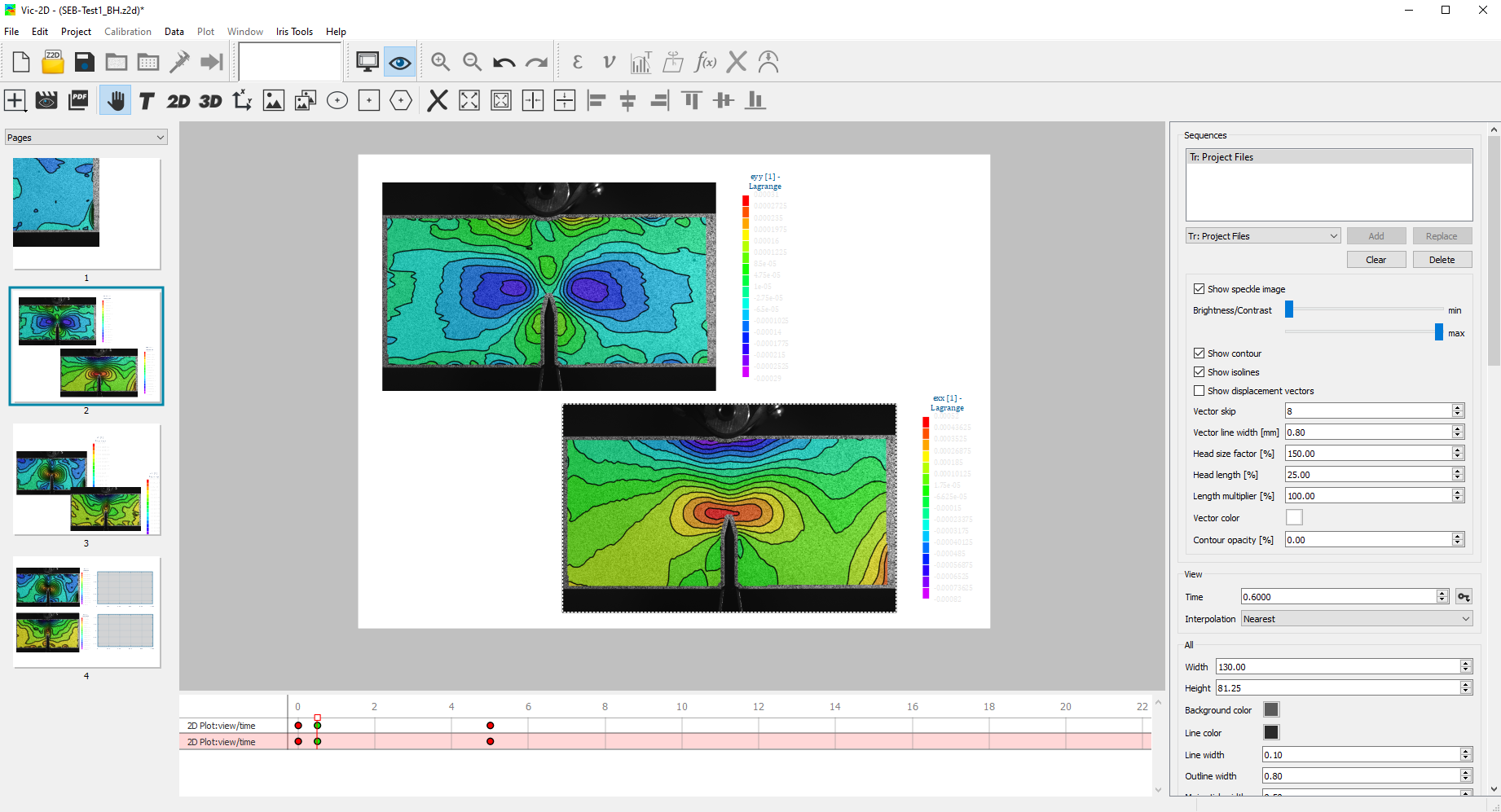
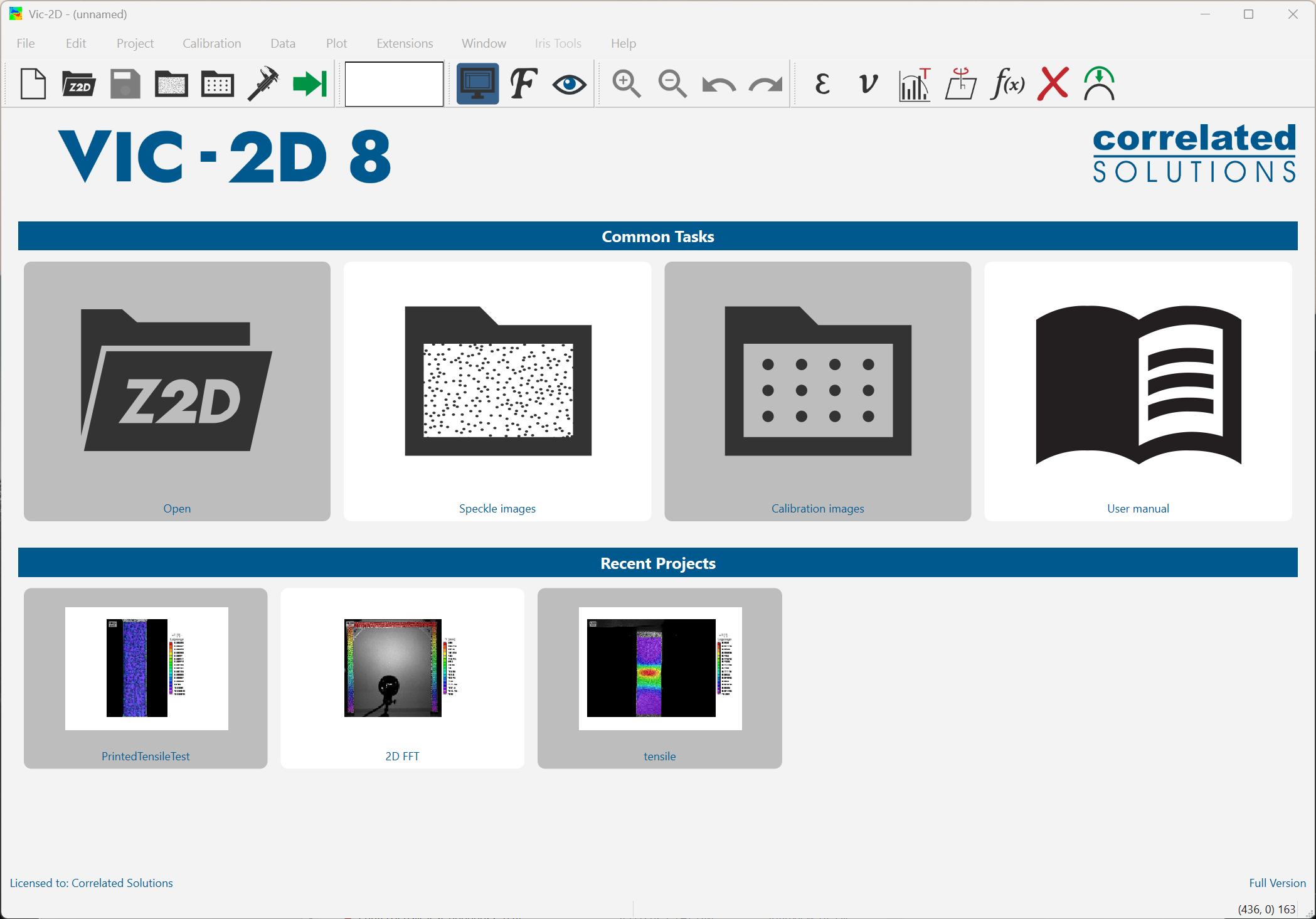
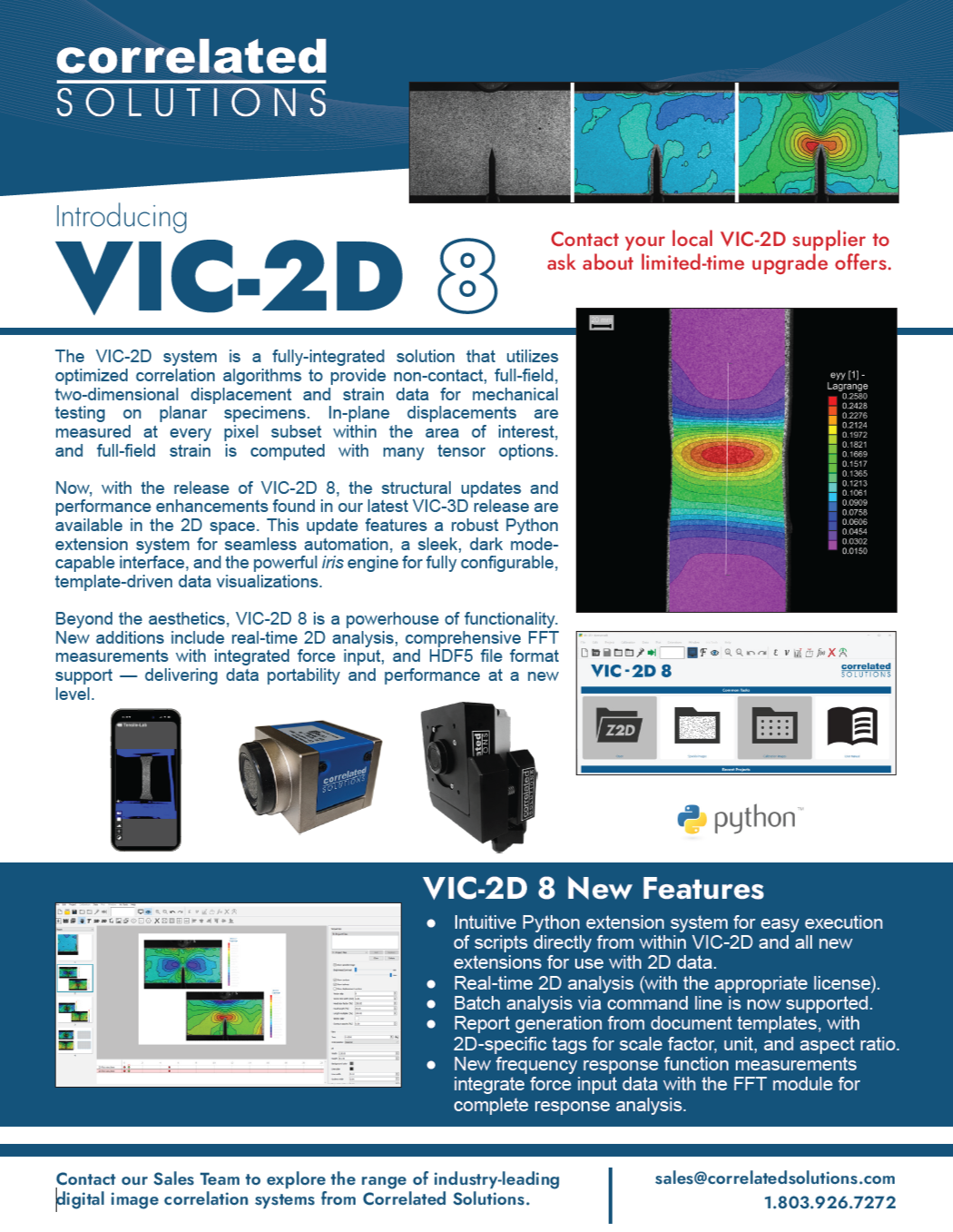
The wait is over: VIC-2D 8 is here. We’ve completely overhauled our 2D digital image correlation suite to include the structural updates and performance enhancements found in our latest VIC-3D release. This update is built for modern experimental mechanics, featuring a sleek, Dark Mode-capable interface, a robust Python extension system for seamless automation, and the powerful iris engine for fully configurable, template-driven data visualization.
Beyond the aesthetics, Version 8 is a powerhouse of functionality. We’ve added real-time 2D analysis, comprehensive FFT measurements with integrated force input, and support for HDF5 file formats to ensure your data is more portable and performant than ever before. With new "Good Practice" tools like the virtual strain gauge and expanded support for 3D mesh files (OBJ, STL, PLY), VIC-2D 8 provides the most comprehensive 2D DIC toolset on the market.
NEW FEATURES IN VIC-2D 8
Fully-integrated Python extension system for easy execution of scripts directly from within VIC-2D and all new extensions for use with 2D data.
Real-time 2D analysis (with the appropriate license).
Batch analysis via command line is now supported.
Report generation from document templates, with 2D-specific tags for scale factor, unit, and aspect ratio.
New frequency response function measurements integrate force input data with the FFT module for complete response analysis.
All new FFT workspace for viewing computed frequency data.
Analysis and FFT workspaces now use the iris-based plot engine, making plots fully configurable with templates, styles, and property editors.
Image files and output data may be stored in HDF5 files for enhanced performance and portability.
Multiple iris documents in a single project.
Video files can be used as image sequences in the iris workspace. Inspector element improvements.
Analysis summary CSV is now saved inside the project file.
Add all data files from a selected folder to the project in a single step.
New Project from Template option for starting pre-configured projects.
Wide range of enhancements to plotting and customizability in all plots, including independent secondary axes for line plots.
New, user-specific global preferences dialog for report documents, plots and graphs.
Improved data extraction facilities, unit management for all variables, and data probing.
Virtual strain gauge tool for computing averaged strain values over a user-defined gauge area, with new features to streamline application of DIC Good Practices.