
World-Class 2D Digital Image Correlation

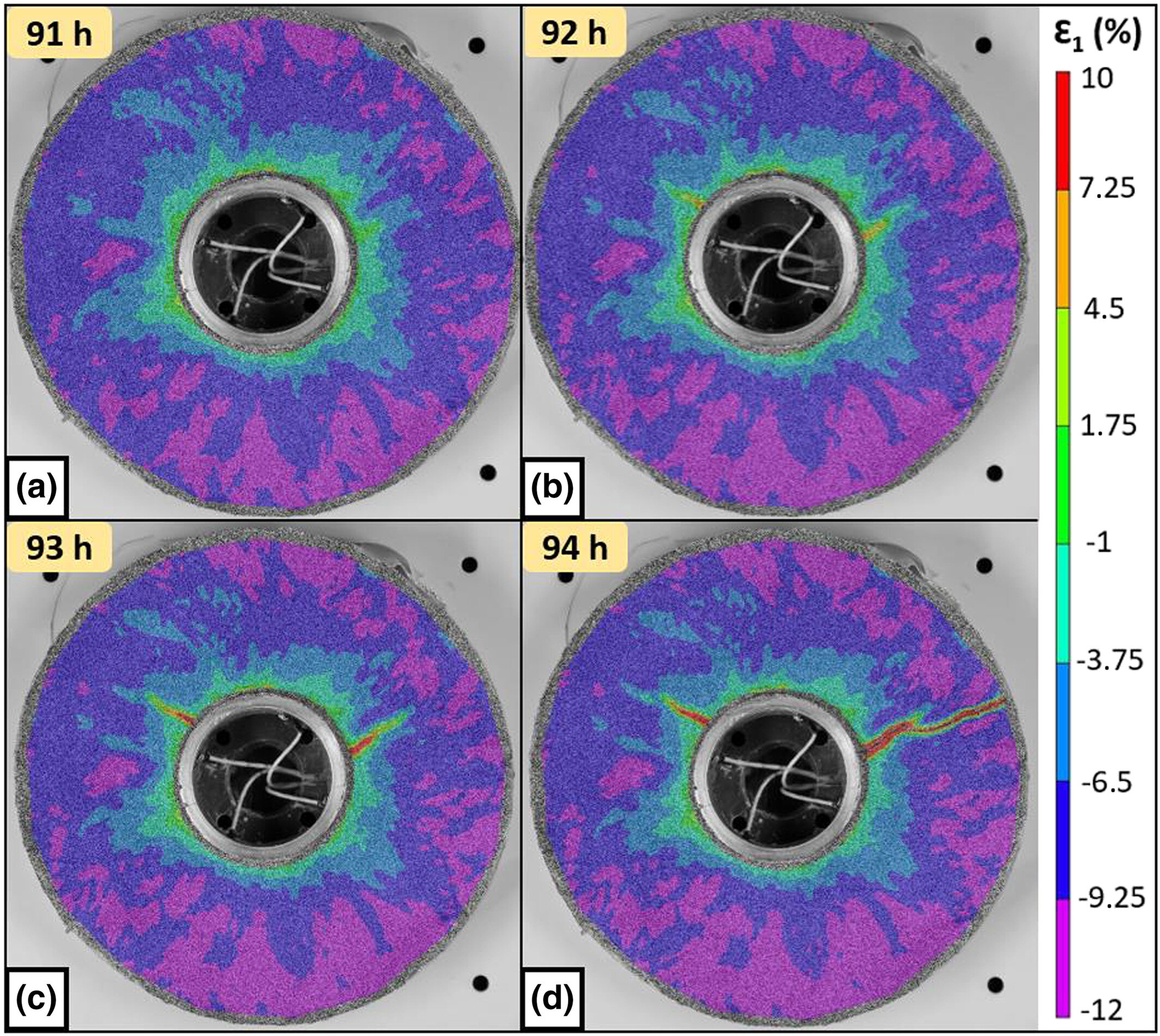
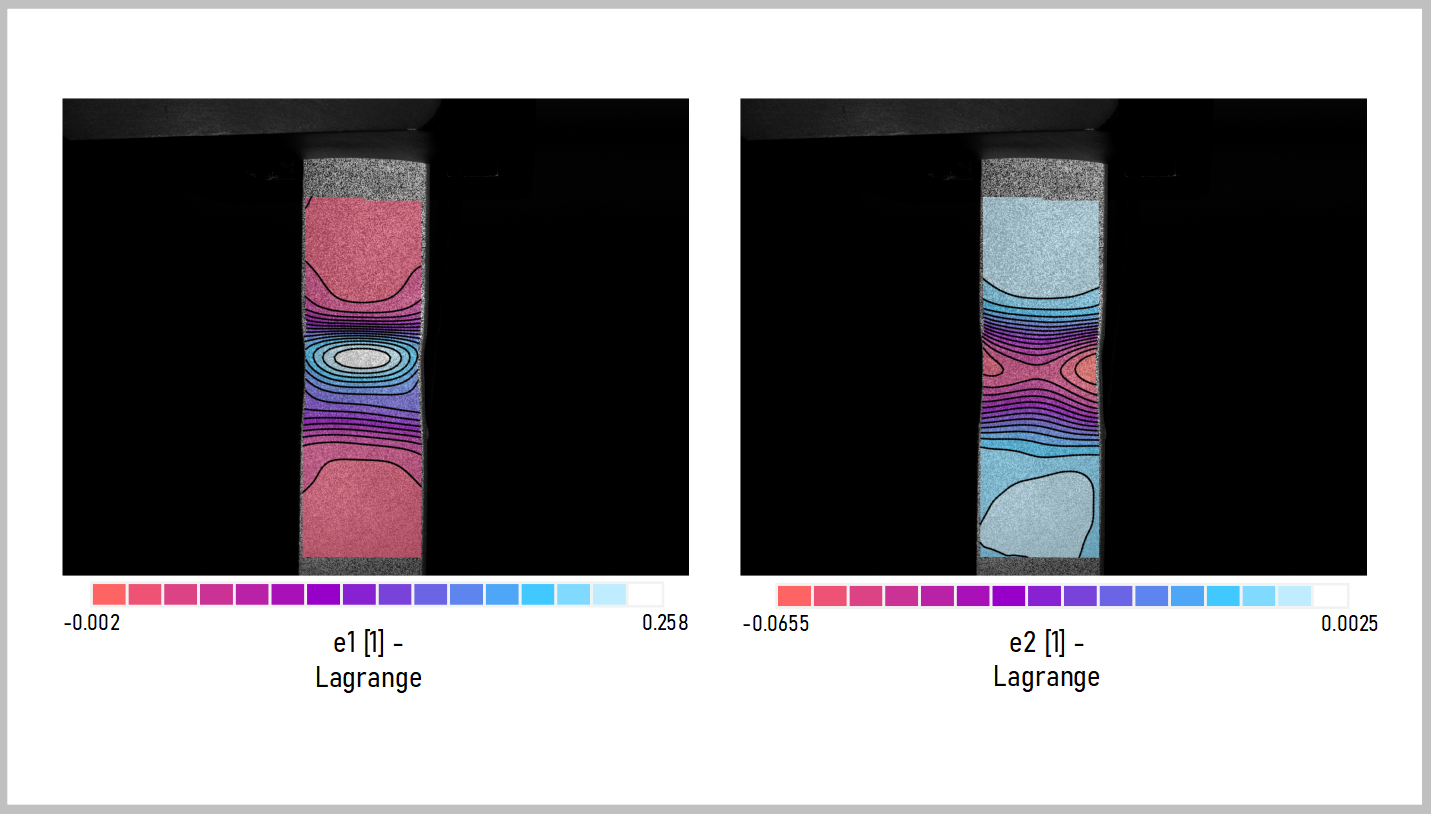
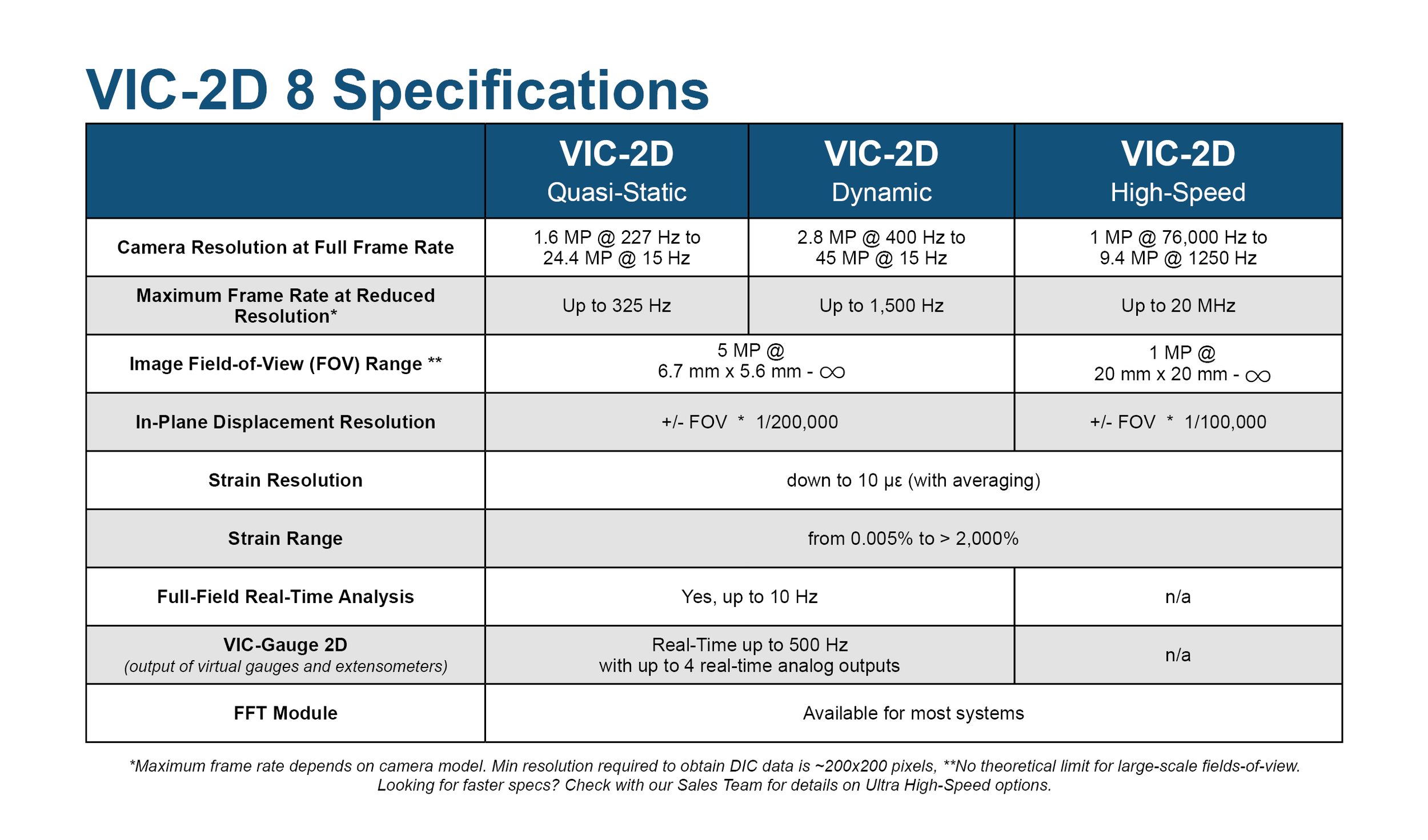
The VIC-2D system is a fully integrated solution that utilizes optimized correlation algorithms to provide non-contact, full-field, two-dimensional displacement and strain data for mechanical testing on planar specimens. In-plane displacements are measured at every point within the area of interest, and the full-field strain field is computed and displayed to easily identify strain concentrations. Sub-micron displacements can be measured, and local strains from 50 microstrain to over 2500% are achievable with extremely low noise levels and high accuracy. Specimen sizes ranging from microscopic to very large scale can be measured by simply adjusting optics. The included software module allows the system to be used with high-powered microscopes such as ATMs or SEMs to measure extremely small specimens. Lastly, the iris graphics engine brings a host of new functionality to DIC data visualization and eliminates the need to use third-party software to produce high-quality presentation material, perform theoretical data comparisons, and much more.
Time filter options
No calibration required for strain computation
Sample size from nanometers to >100 m possible
1/100th pixel motion resolution
Synchronized analog data acquisition
Easy data exporting (CSV, STL, ACII, Matlab, etc.)
Full-field in-plane displacements & strains
Global and local velocities & strain rates
Automatic start point detection
Intuitive Area of Interest (AOI) editor
Create custom variables with custom formulas
Rigid body motion removal tool
In-plane rotation computation
“The VIC-2D system is very user friendly and straight forward to use. We could not have completed our tests as quickly as we wanted without it, and only the DIC technique can give us the spatial distribution of strains at high strain rates that we desired.”
-Dr. Sherif El-Tawil, Civil & Environmental Engineering, University of Michigan
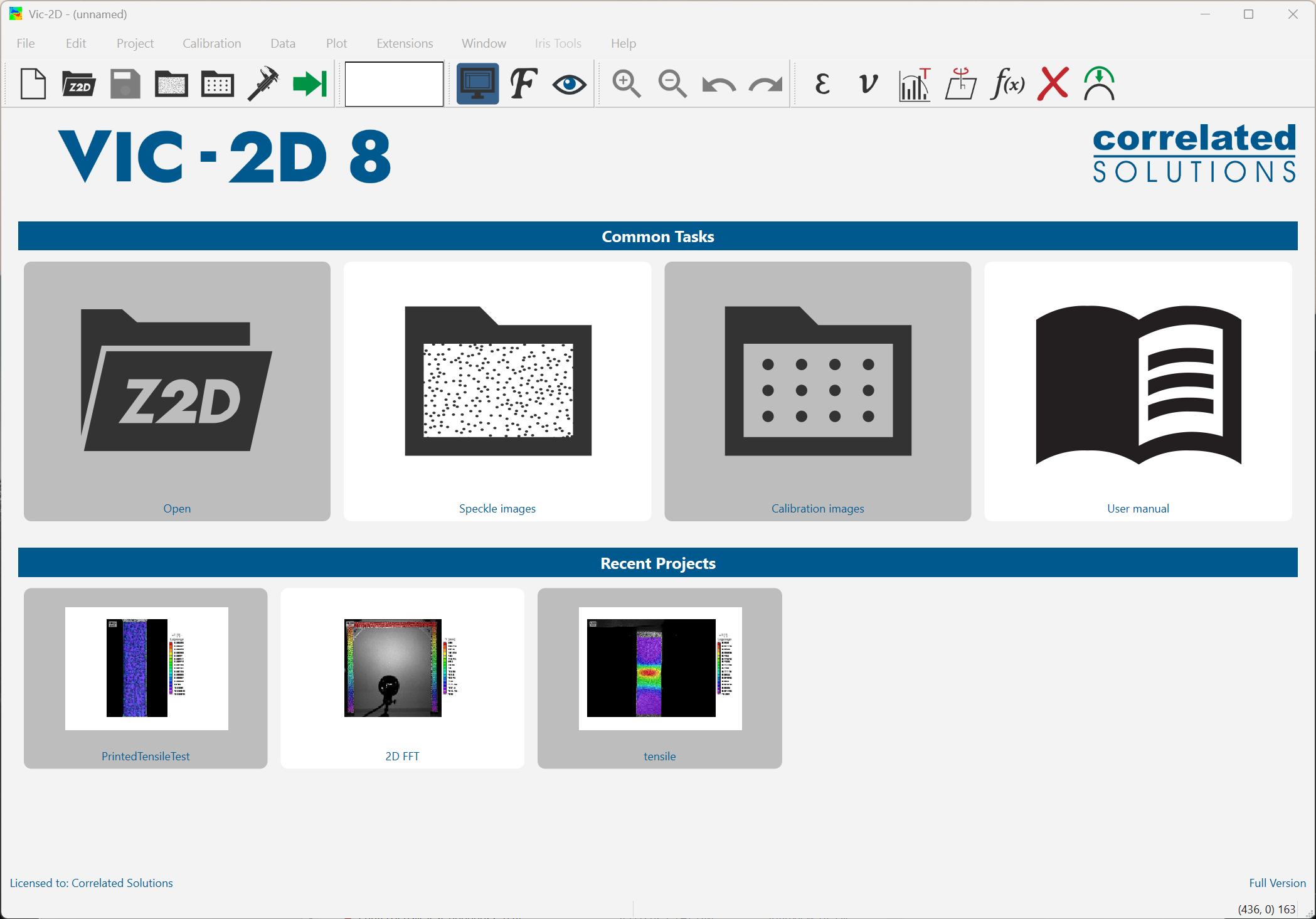
VIC-2D Version 8 with iris
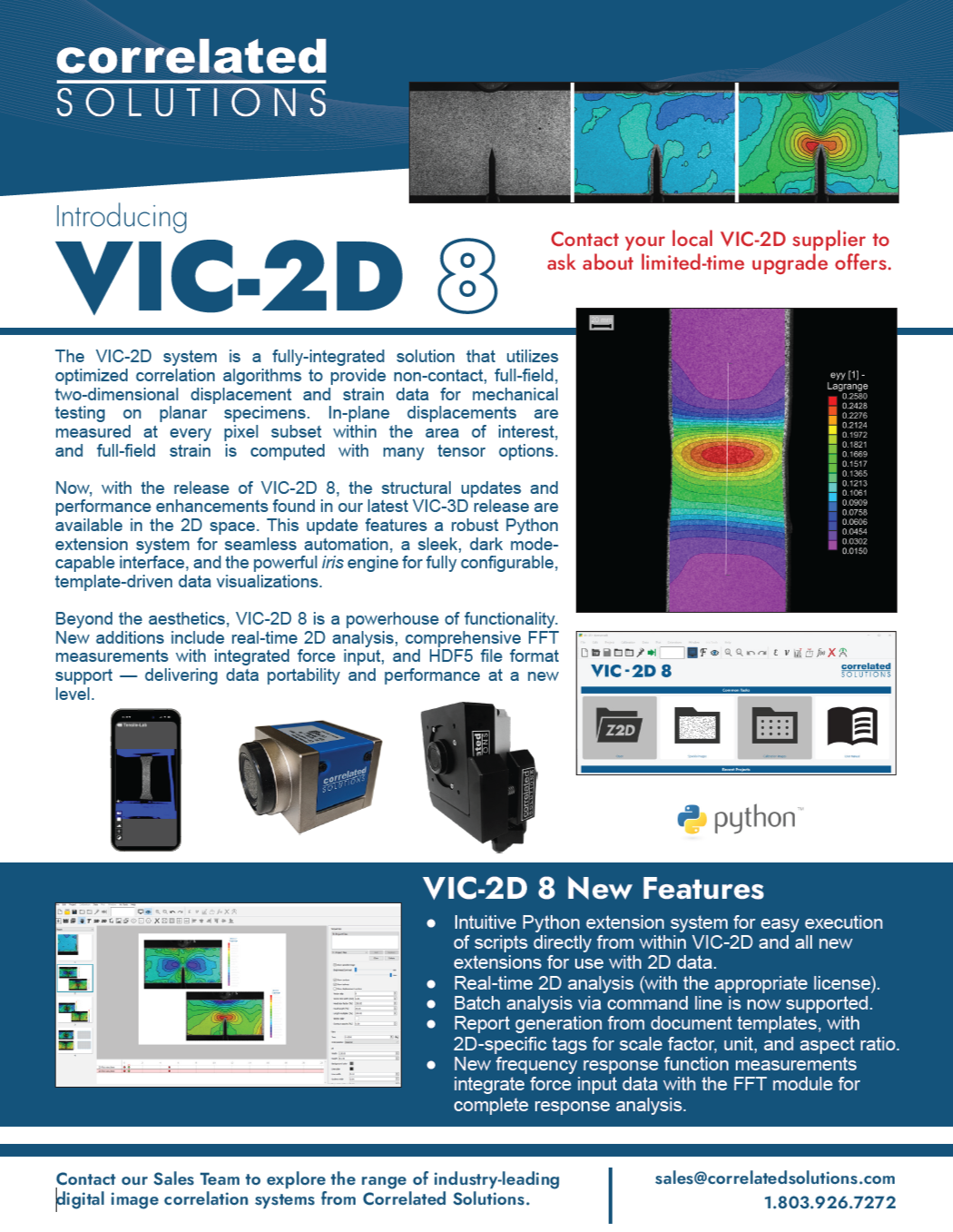
With the release of VIC-2D 8, the structural updates and performance enhancements found in our latest VIC-3D release are available in the 2D space. This update features a robust Python extension system for seamless automation, a sleek, dark mode-capable interface, and the powerful iris engine for fully configurable, template-driven data visualizations.
Beyond the aesthetics, VIC-2D 8 is a powerhouse of functionality. New additions include real-time 2D analysis, comprehensive FFT measurements with integrated force input, and HDF5 file format support — delivering data portability and performance at a new level.
New Features Include:
Fully-integrated Python extension system for easy execution of scripts directly from within VIC-2D and all new extensions for use with 2D data.
Real-time 2D analysis (with the appropriate license).
Batch analysis via command line is now supported.
Report generation from document templates, with 2D-specific tags for scale factor, unit, and aspect ratio.
New frequency response function measurements integrate force input data with the FFT module for complete response analysis.
All new FFT workspace for viewing computed frequency data.
Analysis and FFT workspaces now use the iris-based plot engine, making plots fully configurable with templates, styles, and property editors.
Image files and output data may be stored in HDF5 files for enhanced performance and portability.
Multiple iris documents in a single project.
Video files can be used as image sequences in the iris workspace. Inspector element improvements.
Analysis summary CSV is now saved inside the project file.
Add all data files from a selected folder to the project in a single step.
New Project from Template option for starting pre-configured projects.
Wide range of enhancements to plotting and customizability in all plots, including independent secondary axes for line plots.
New, user-specific global preferences dialog for report documents, plots and graphs.
Improved data extraction facilities, unit management for all variables, and data probing.
Virtual strain gauge tool for computing averaged strain values over a user-defined gauge area, with new features to streamline application of DIC Good Practices.
Application Examples
The VIC-2D system is used where strain distributions need to be measured on flat specimens of almost any material. Common applications include testing in tension, shear, crack growth, fatigue/cyclic and more. Localized strain fields are computed, displayed, and easily exported for FEA validation.